A cryptocurrency is a digital or virtual currency that uses
cryptography for security. Unlike traditional currencies, most
cryptocurrencies are decentralized and operate on blockchain technology.
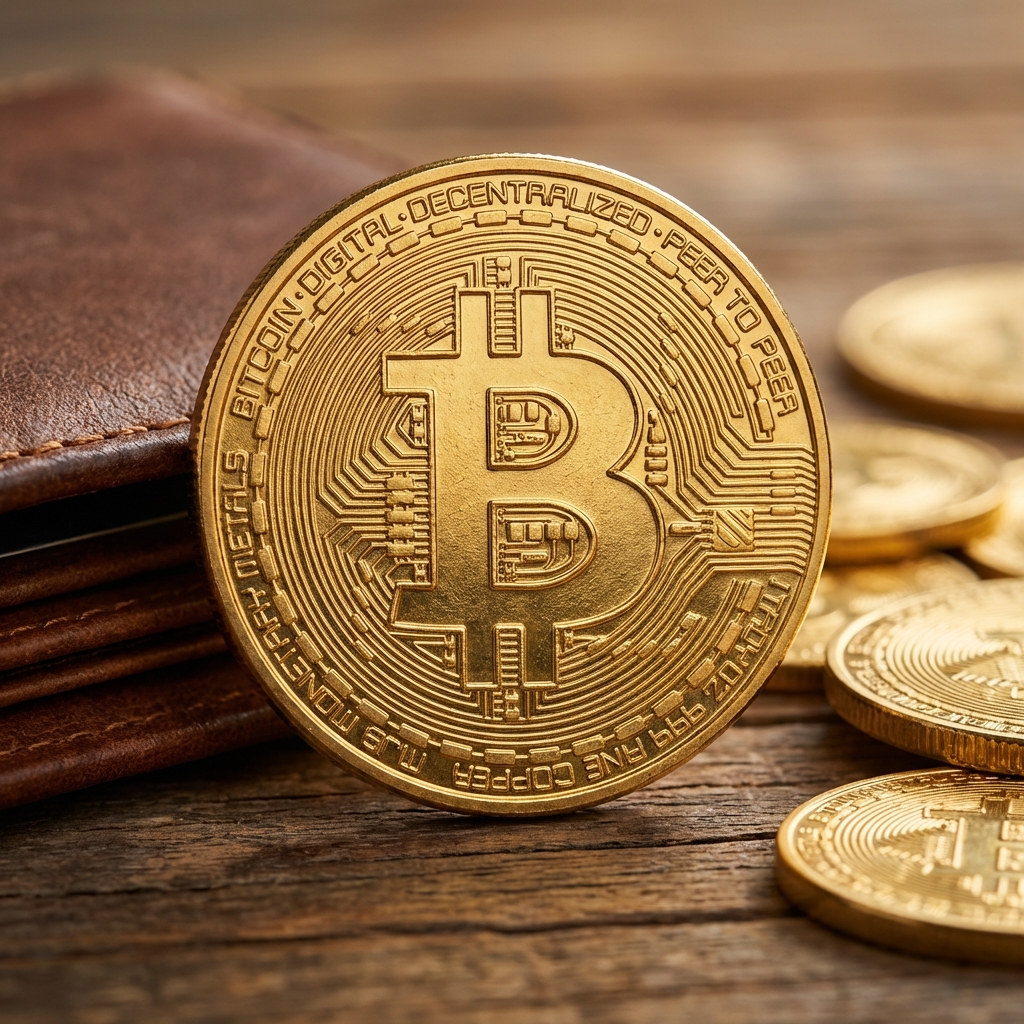
🪙 Bitcoin (BTC) – The King of Crypto
Bitcoin was the first cryptocurrency, created by Satoshi Nakamoto
in . It remains the largest and most well-known
cryptocurrency in the world.
Key Facts About Bitcoin
Creator
Satoshi Nakamoto (pseudonym)
Launch Year
Symbol
BTC
Max Supply
21,000,000 BTC
Consensus
Proof of Work (PoW)
Block Time
~10 minutes
Smallest Unit
1 Satoshi = 0.00000001 BTC
All-Time High
~$109,000 (January 2025)
What Makes Bitcoin Special?
First mover advantage – the original cryptocurrency
Scarcity – only 21 million will ever exist (like digital gold)
Decentralized – no government or company controls it
Store of value – often called “digital gold”
Global – can be sent anywhere in the world
💡 What is a “Halving”?
Approximately every 4 years (or every 210,000 blocks), the reward miners
receive for creating new blocks is cut in half. This is called the
Bitcoin halving. It reduces the rate at which new BTC enters circulation,
increasing scarcity over time.
Bitcoin Halving History
Year
Block Reward Before
Block Reward After
2009
–
50 BTC
2012
50 BTC
25 BTC
2016
25 BTC
12.5 BTC
2020
12.5 BTC
6.25 BTC
2024
6.25 BTC
3.125 BTC
💠 Ethereum (ETH) – The Programmable Blockchain
Ethereum was proposed by Vitalik Buterin in 2013 and launched in
. While Bitcoin is primarily a currency,
Ethereum is a platform that can run smart contracts—self-executing
programs stored on the blockchain.
Key Facts About Ethereum
Creator
Vitalik Buterin & co-founders
Launch Year
Symbol
ETH
Max Supply
No hard cap (but net issuance is near zero post-Merge)
Consensus
Proof of Stake (PoS) – since Sept 2022
Block Time
~12 seconds
Smallest Unit
1 Wei = 0.000000000000000001 ETH
Smart Contracts
Yes ✅
What Can You Build on Ethereum?
DeFi Apps – Lending, borrowing, trading without banks
NFTs – Unique digital art & collectibles
DAOs – Decentralized Autonomous Organizations
Games – Blockchain-based games with real ownership
Identity Systems – Self-sovereign digital identities
“Bitcoin is a calculator. Ethereum is a smartphone.”
— Common analogy in the crypto community
💰 Notable Altcoins
Any cryptocurrency that isn’t Bitcoin is called an “altcoin”
(alternative coin). Here are some of the most important ones:
Cardano (ADA)
Founded by Charles Hoskinson (Ethereum co-founder). Cardano takes
a research-driven approach, with every protocol change peer-reviewed
by academics before implementation.
Solana (SOL)
Known for its incredible speed—processing up to 65,000 transactions
per second. Uses a unique Proof of History mechanism combined with
Proof of Stake.
Ripple (XRP)
Designed for cross-border payments between banks and financial institutions.
Transactions settle in 3-5 seconds and cost fractions of a cent.
Polkadot (DOT)
Created by Gavin Wood (another Ethereum co-founder). Polkadot connects
multiple blockchains together, enabling them to communicate and share data.
Chainlink (LINK)
An “oracle” network that connects smart contracts to real-world
data. Without Chainlink, smart contracts can’t know things like
stock prices, weather data, or sports scores.
💵 Stablecoins
Stablecoins are cryptocurrencies designed to maintain a stable value,
usually pegged to a real-world asset like the US Dollar.
Why Do Stablecoins Exist?
Regular cryptocurrencies like Bitcoin can swing 10-20% in value in a single day.
Stablecoins solve this problem by staying at ~$1.00, making them useful for:
Trading pairs on exchanges
Sending money internationally
DeFi lending and borrowing
Protecting against volatility
Popular Stablecoins
Name
Symbol
Pegged To
Type
Tether
USDT
US Dollar
Fiat-backed
USD Coin
USDC
US Dollar
Fiat-backed
DAI
DAI
US Dollar
Crypto-collateralized
🎭 Tokens vs Coins – What’s the Difference?
People often use these terms interchangeably, but they are different:
Feature
Coin
Token
Has its own blockchain?
Yes ✅
No ❌ (built on another blockchain)
Examples
BTC, ETH, SOL, ADA
USDT, LINK, UNI, SHIB
Primary use
Medium of exchange, store of value
Access to services, governance, utilities
Creation
Requires building a blockchain
Can be created with a smart contract
💡 What are ERC-20 Tokens?
ERC-20 is a standard for creating tokens on the Ethereum blockchain.
It defines a set of rules that all Ethereum tokens must follow, ensuring they
work with wallets, exchanges, and other applications. Most tokens you’ve
heard of (USDT, LINK, UNI) are ERC-20 tokens.
📊 Cryptocurrency Comparison
Top Cryptocurrencies at a Glance
Crypto
Year
Consensus
Max Supply
Speed (TPS)
Main Use
Bitcoin
2009
PoW
21M
~7
Store of value
Ethereum
2015
PoS
No cap
~30
Smart contracts
Solana
2020
PoH + PoS
No cap
~65,000
High-speed DApps
Cardano
2017
PoS
45B ADA
~250
Research-based platform
XRP
2012
Consensus Protocol
100B XRP
~1,500
Cross-border payments
TPS = Transactions Per Second
🛒 How to Buy Cryptocurrency (Overview)
Here’s a simplified overview of the process:
Choose an exchange (e.g., Coinbase, Binance, Kraken)
Create an account and verify your identity (KYC)
Deposit funds (bank transfer, credit card, etc.)
Select a cryptocurrency and place your order
Store safely – transfer to a personal wallet for security
⚠ Disclaimer:This is educational content only. Cryptocurrency
investments carry significant risk. Never invest more than you can afford to lose.