From early cryptography concepts to a multi-trillion dollar ecosystem—blockchain
has come a long way. Let’s travel through time!
🔐 Pre-Bitcoin Era (1991–2008)
The ideas behind blockchain didn’t appear overnight. Many brilliant minds
contributed to the cryptographic foundations that made blockchain possible.
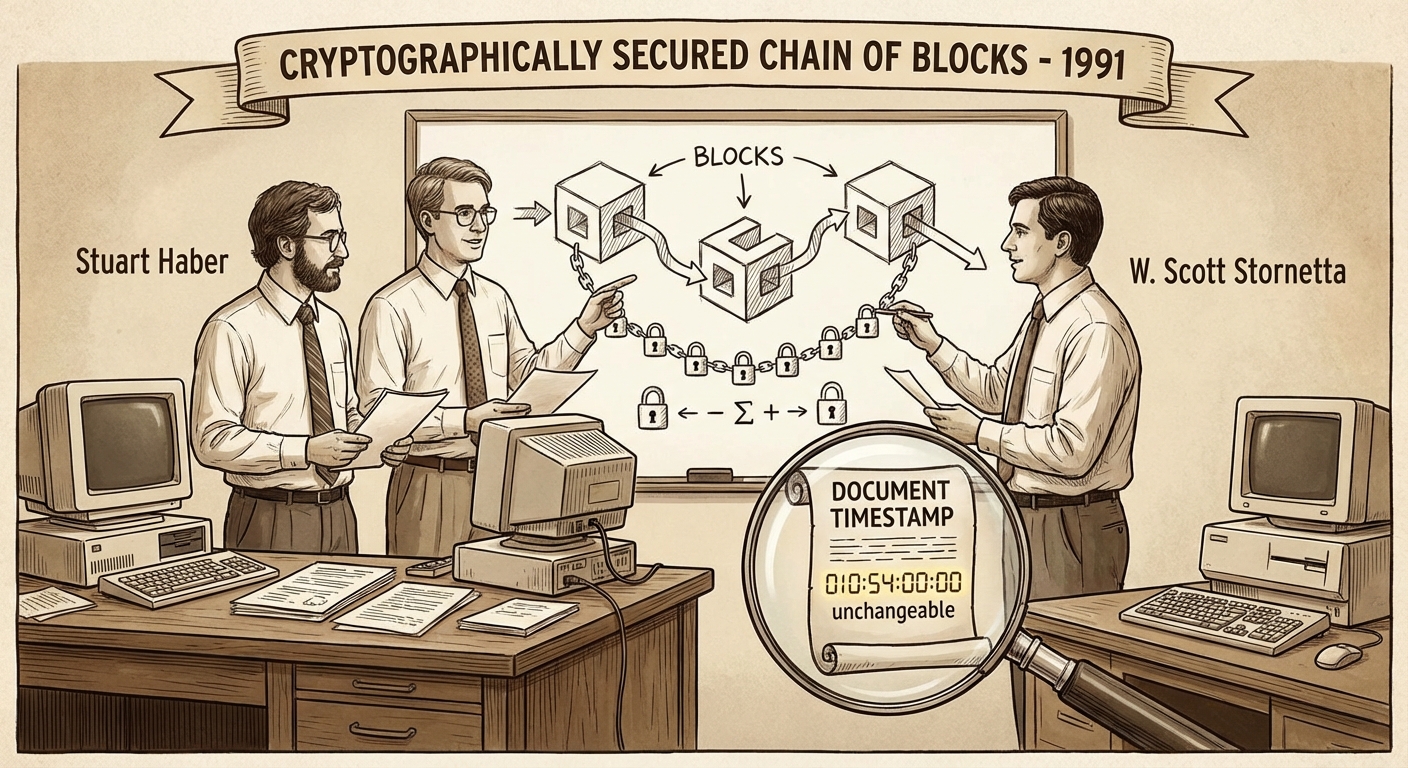
1991 – The Concept of a Timestamped Chain
Researchers Stuart Haber and W. Scott Stornetta described the first
work on a cryptographically secured chain of blocks. Their goal was to create a system
where document timestamps could not be tampered with.
1998 – B-Money & Bit Gold
Computer scientist Wei Dai published a proposal for "b-money",
an anonymous, distributed electronic cash system. Around the same time,
Nick Szabo designed "Bit Gold"—a mechanism for a
decentralized digital currency. Neither was implemented, but both heavily
influenced what came next.
2004 – Reusable Proof of Work
Hal Finney introduced a system called RPOW.
It used hashcash as a proof of work token. This was an important stepping
stone toward Bitcoin’s design.
💡 Who were the Cypherpunks?
The Cypherpunk movement was a group of activists and technologists in the
1990s who advocated for privacy through cryptography. Many blockchain
pioneers—including Wei Dai, Nick Szabo, and Hal Finney—were
part of this community. They communicated through a mailing list and believed
that strong encryption was essential for a free society.
🌟 The Birth of Bitcoin (2008–2009)
– The Whitepaper
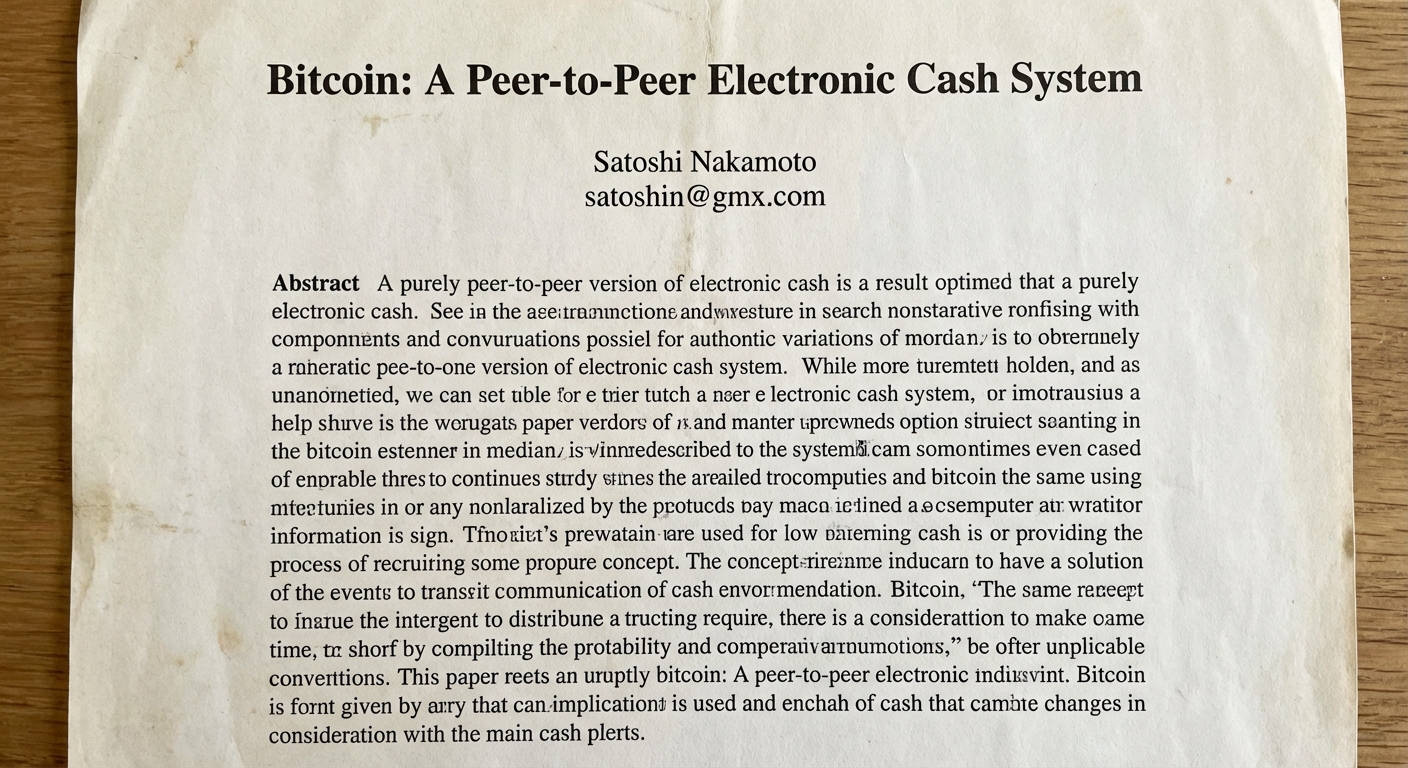
A person (or group) using the pseudonym Satoshi Nakamoto published a
groundbreaking whitepaper titled:
"Bitcoin: A Peer-to-Peer Electronic Cash System"
— Satoshi Nakamoto
This nine-page document described a system for electronic transactions
without relying on trust. It introduced concepts like:
Proof of Work – a consensus mechanism to validate transactions
The Blockchain – a chain of blocks recording all transactions
Peer-to-peer network – no central server needed
Digital signatures – cryptographic proof of ownership
Incentive system – miners receive rewards for their work
Figure: The first page of the Bitcoin whitepaper
– The Genesis Block
Satoshi mined the first-ever block (Block 0), known as the Genesis Block.
Embedded in its data was the famous message:
"The Times 03/Jan/2009 Chancellor on brink of second bailout for banks"
– First Transaction
The first Bitcoin transaction occurred when Satoshi sent 10 BTC
to Hal Finney—in block 170. This proved the system actually worked!
🚀 Early Growth (2010–2013)
2010 – The Pizza That Changed Everything
On , programmer Laszlo Hanyecz
made the first real-world Bitcoin transaction: he paid 10,000 BTC for two pizzas
from Papa John’s. Today, that amount would be worth hundreds of millions
of dollars. This date is now celebrated as “Bitcoin Pizza Day.”
2011 – Altcoins Emerge
Inspired by Bitcoin, other cryptocurrencies (called altcoins) began appearing:
Litecoin (LTC) – created by Charlie Lee, designed to be "silver to Bitcoin's gold"
Namecoin – aimed at decentralizing domain name registration
2013 – Bitcoin Reaches $1,000
For the first time, 1 BTC = $1,000. The world started paying serious attention.
Around this time, the Ethereum whitepaper was published by a young programmer
named Vitalik Buterin.
📎 The Ethereum Era (2014–2017)
2015 – Ethereum Launches
Ethereum went live on .
Unlike Bitcoin, Ethereum wasn't just a currency—it was a
programmable blockchain that could run smart contracts:
self-executing agreements written in code.
"Whereas most technologies tend to automate workers on the periphery
doing menial tasks, blockchains automate away the center. Instead of
putting the taxi driver out of a job, blockchain puts Uber out of a
job and lets the taxi drivers work with the customer directly."
— Vitalik Buterin, Co-founder of Ethereum
2017 – ICO Boom & Bitcoin Hits $20,000
Initial Coin Offerings (ICOs) exploded in popularity. Thousands of new tokens
were created on the Ethereum blockchain. Bitcoin reached an all-time high of
nearly $20,000 in December 2017.
⚠ The ICO Wild West
While some ICOs funded legitimate projects, many were scams.
Projects would create a token, write a fancy whitepaper, and raise millions
without delivering any actual product. This led to increased regulatory
attention worldwide.
🌎 Going Mainstream (2018–2025)
2020–2021 – DeFi & NFT Explosion
DeFi (Decentralized Finance) protocols allowed users to lend, borrow,
and trade without banks. NFTs (Non-Fungible Tokens) took the art
and collectibles world by storm.
2021 – Bitcoin Reaches $69,000
Bitcoin hit a new all-time high of ~$69,000 in November 2021.
El Salvador became the first country to adopt Bitcoin as legal tender.
2022–2023 – Ethereum Merges to Proof of Stake
On , Ethereum completed
"The Merge"—transitioning from Proof of Work to Proof of Stake,
reducing its energy consumption by ~99.95%.
2024–2025 – Institutional Adoption
Major financial institutions launched Bitcoin ETFs, governments explored
Central Bank Digital Currencies (CBDCs), and blockchain became a standard
enterprise technology.
📅 Complete Timeline
Major Blockchain Milestones
Year
Event
Significance
Haber & Stornetta publish timestamped chain concept
Foundation of blockchain idea
B-Money & Bit Gold proposed
First digital currency concepts
Hal Finney creates RPOW
Proof of Work milestone
Bitcoin whitepaper published
Blockchain is born
Genesis Block mined
First blockchain goes live
Bitcoin Pizza Day (10,000 BTC for 2 pizzas)
First real-world BTC transaction
Bitcoin reaches $1,000 & Ethereum whitepaper published